

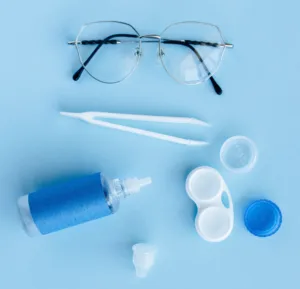
Photo by Nataliya Vaitkevich
When you’ve had your comprehensive eye exam and get the news that your vision isn’t perfect anymore, you may find that you now need corrective lenses to bring your vision back to the 20/20 status you once enjoyed. The good news is that there are a lot of options available in what those corrective lenses can look like: traditional eyeglass frames or contact lenses.
Traditional eyeglasses offer a variety of styles, shapes, and can double as sunglasses with transition lenses that darken when you go outside. Coatings can be added to the lenses that block blue light coming from our electronic devices, which can harm our eyes, causing digital-eye strain. While frames can be both functional and fashionable, they’re not without their downsides: constant cleaning of the lenses because of smudges, dirt, having them slip down your nose (or off your face entirely) if the fit loosens, and scratches obscuring your vision are the big issues. And it can be an appearance change that some people aren’t ready for just yet.
The alternative? Contact lenses. Contacts have their pros and cons as well, and it’s important to understand them. The thin, corrective lenses rest on top of your cornea on your eyeball, rather than in an eyeglass frame. They can be used for nearsightedness, farsightedness, age-related farsightedness (presbyopia), and astigmatism. They can assist with various other eye issues, as outlined extensively on the Mayo Clinic’s website.
The pros include the obvious: no frames! No obstructed views! No fogging up! No impingement on your active lifestyle! And you can get colored lenses to enhance your natural eye color if you’d like.
About 45 million Americans choose to wear contacts, according to the National Institutes of Health. But it can take some time to get the right fit for your eyes. This includes the type of lenses to get (hard or soft), what the schedule for replacement is for them (daily or extended wear), and how often to replace them. Issues like dry eyes can greatly affect how comfortable they are, whether you have allergies, and how often you can clean them to prevent eye irritation. So it’s very important to talk with your eye-care provider about what is right for you and to keep that conversation going to ensure that you’re getting the right lens for your eyes.