

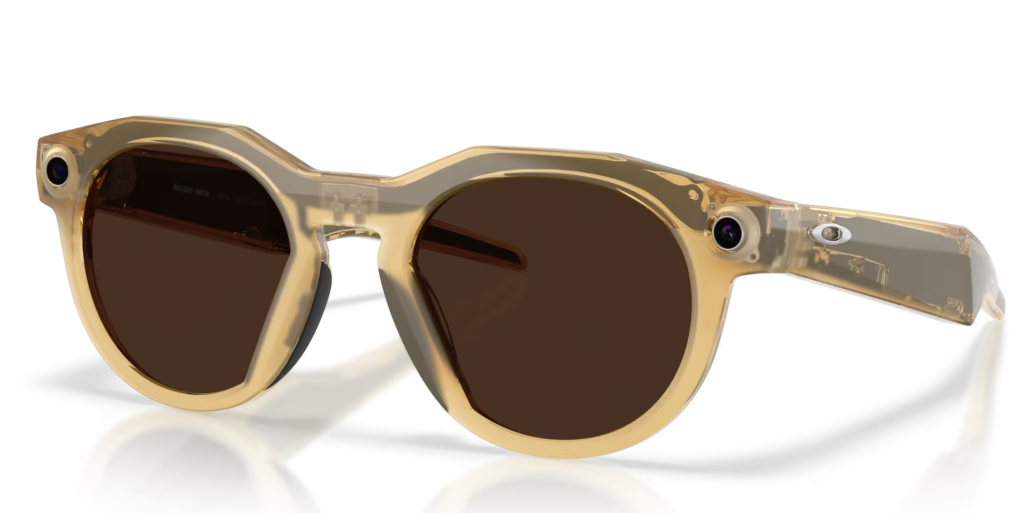
Oakley AI Glasses – www.oakleysi.com
Smart glasses, such as META’s Ray-Bans and Oakley AI Glasses, have been around since 2021. Initially marketed as wearable entertainment technology that could capture photos, short videos, and allow wearers to listen to music with either a touch to the eyeglass frame or by voice command, they have since grown into incorporating assistive technologies to help users with low vision to navigate their surroundings. This is particularly useful for people with age-related macular degeneration and cataracts because these conditions can partially obscure vision as they progress, making it difficult to read and get around.
By using built-in cameras, artificial intelligence, and open-ear audio, the glasses allow the wearer to issue hands-free voice commands that can include asking to capture and read text, such as medicine labels, nutrition labels, menus, and so on. Additionally, if there’s confusion regarding their surroundings, wearers can ask for descriptors to help them navigate, whether that be for maps, museums, airports, retail stores, etc., helping to expand their independence in those situations.
Taking it a step further, Live Assistance Integration allows people to get real-time aid through applications like Be My Eyes, which allows Smart Glasses wearers to live-stream their whereabouts in tricky situations so helper volunteers can verbally guide them to where they need to go.
It’s important to note that these are assistive devices rather than corrective ones. They won’t cure your macular degeneration or cataracts, but they can act as a bridge to make life easier in some situations. While there are limitations to the technology, it’s only been a few years since its emergence onto the scene, so it will be interesting to see where this technology could lead in the future.
If you feel you would benefit from META’s Ray-Ban Smart Glasses or Oakley AI glasses, All About Eyes can prescribe them or fill an outside prescription for them.