

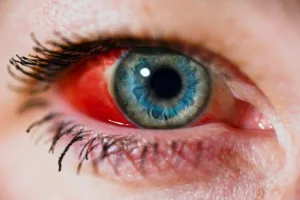
 Earlier this month at the annual World Economic Forum held in Davos, Switzerland, many were surprised to see France’s President Emmanuel Macron sporting mirrored aviator sunglasses at the podium delivering his speeches. The fashion accessory, more in line with a celebrity red-carpet event, was a distraction from what was actually going on: hiding a subconjunctival hemorrhage. It was a trade-off: invite speculation on why he was wearing the cool glasses or show the world his scary-looking eye.
What is Subconjunctival Hemorrhage?
As the name suggests, a tiny broken blood vessel causes this condition, and blood spreads along the conjunctiva, the eye’s thin lining. Sometimes it can appear as a spot, other times, depending on the size of the burst vessel, the blood can “leak” around the whites of the eye, under the membrane, etc., before it gets reabsorbed into the body and clears up. While it can look alarming and unsightly, it’s not painful nor does it require bandages. The Mayo Clinic likens a subconjunctival hemorrhage to a bruise. It’s usually harmless, but can cause some minor itching during the healing phase. No change in vision should occur. Sunglasses may be necessary to disguise it, especially if you’re a world leader.
Causes of Subconjunctival Hemorrhage
It can be a simple case of sneezing too hard that causes a blood vessel to tear in the eye; coughing, straining, lifting heavy things can all also cause a burst vessel. Alternatively, an injury to the eye can cause a hemorrhage, which you should always have examined by your eye-care professional to ensure there’s no further damage. However, if you get them regularly, that may be a signal that something else is going on in your body, and it’s showing up as periodic burst blood vessels. The culprit in that case, according to the Cleveland Clinic, is usually high blood pressure, diabetes, or blood-clotting issues. Again, checking with your eye-care professional and primary care doctor to address those underlying conditions is prudent for your overall health.